
Description
Single Yellow/Amber Sequential Traffic Cone Lamp – Infrared Synchro Cascade Lamp
Sequential Road Taper Cone Lamp
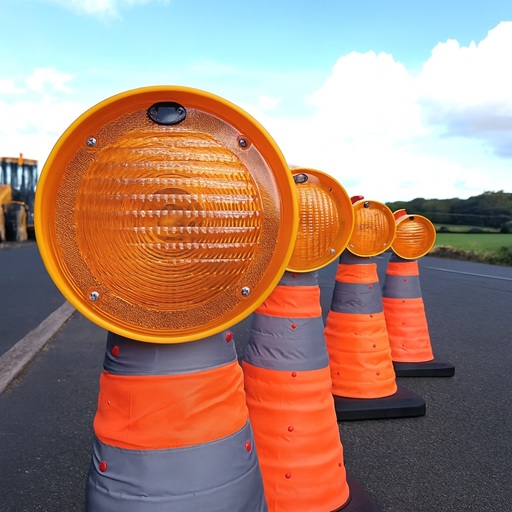
This sequential road taper cone lamp, often referred to as a synchro lamp, uses infrared technology to signal the next lamp in sequence. When deployed on road tapers or lane merges, the lamps create a cascading yellow chase effect that flashes away from oncoming drivers, improving visibility and directional guidance.
After being pushed down onto a traffic cone, the lamp activates and begins determining its position in the sequence. Within 10–15 seconds, each lamp identifies the next unit in line and establishes the correct flashing order.
High-Performance LED Output
A 1W yellow LED provides illumination with a flash rate of 60 flashes per minute at 30CD brightness (L7 Class), accompanied by a steady background mode of 2CD (L3 Class). The lamp produces a constant light output as soon as it is powered on, with a high-intensity flash followed by a low-intensity background light between flashes.
Long Battery Life
The synchro lamp uses a single standard 4R25 battery (not supplied). High‑specification batteries can provide up to 1000 hours of operation, with performance characteristics similar to other market-leading traffic cone barrier lamps (subject to battery quality).
Certified to EN12352:2006+AC2009.
Positioning, Powering On & Use
Position lamps with an offset of ±10 degrees. This ensures correct line‑of‑sight for oncoming vehicles and allows the IR sensors to establish the flashing sequence. All lamps in a sequence should be orientated with the same angle.
Pushing the lamp down onto the traffic cone depresses the power switch, activating the unit. Within 15–20 seconds, lamps identify their nearest counterparts and establish a front‑to‑back sequential pattern.
A rear indicator light flashes when a signal is being received from the lamp ahead. This helps operators quickly identify lamps that are incorrectly positioned, obstructed, or potentially damaged.
If the rear indicator is not flashing consistently, reposition the lamp or remove it from the sequence for inspection.
For best performance, lamps should be positioned 2–6 metres apart. This spacing ensures that if one lamp fails, the IR signal can still reach the next lamp in line, maintaining the sequential effect even if batteries deplete.
In testing, lamps with high‑quality batteries performed continuously for approximately 120 hours. Battery performance may vary in cold weather conditions.
For best results, deploy lamps from the same manufacturer. Mixing brands may affect interoperability.
Practical Design
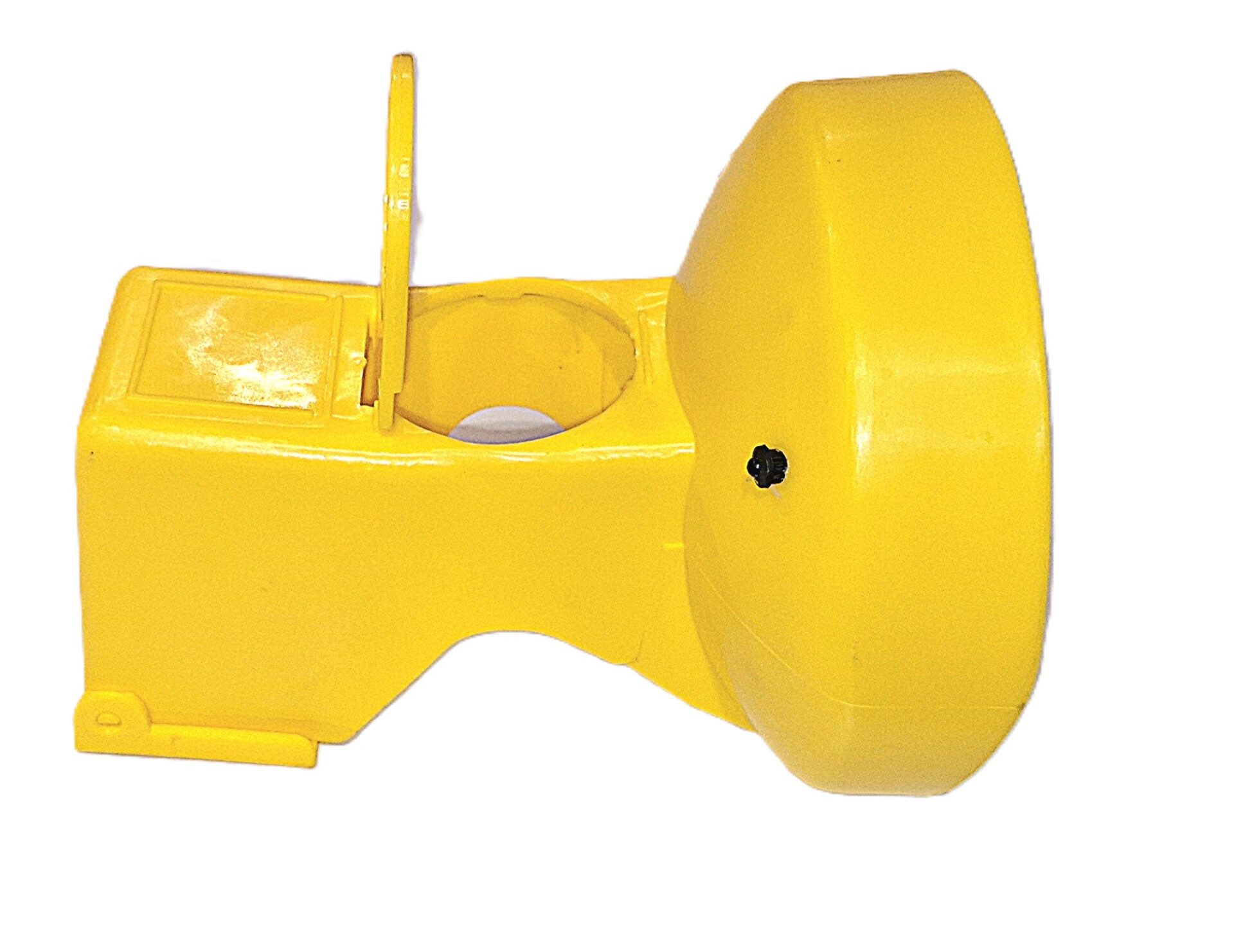
The familiar wrap‑around battery housing design allows operators to replace batteries quickly, even in cold weather. The housing pushes through the centre of the lamp, securely holding the battery in place and reducing the chance of freezing or dirt ingress.
The loop handle can be pushed forward to engage with the lipped top of many traffic cones, providing additional security beyond gravity alone.
The simple design is easy to maintain and clean. Upright positioning allows drainage, and internal components are treated for corrosion resistance, ensuring long‑term performance in UK weather conditions.
Battery connecting points accept the battery in either orientation, provided the springs are inserted first.
Serviceable Components
Traffic management operators often report that the battery housing is the component most prone to wear due to lamps being thrown during collection. This lamp’s battery housing is detachable and replaceable.
The lens is also detachable, allowing damaged lamps to be repaired using salvageable components from other units. This provides a strong economic advantage over lamps with no serviceable parts.
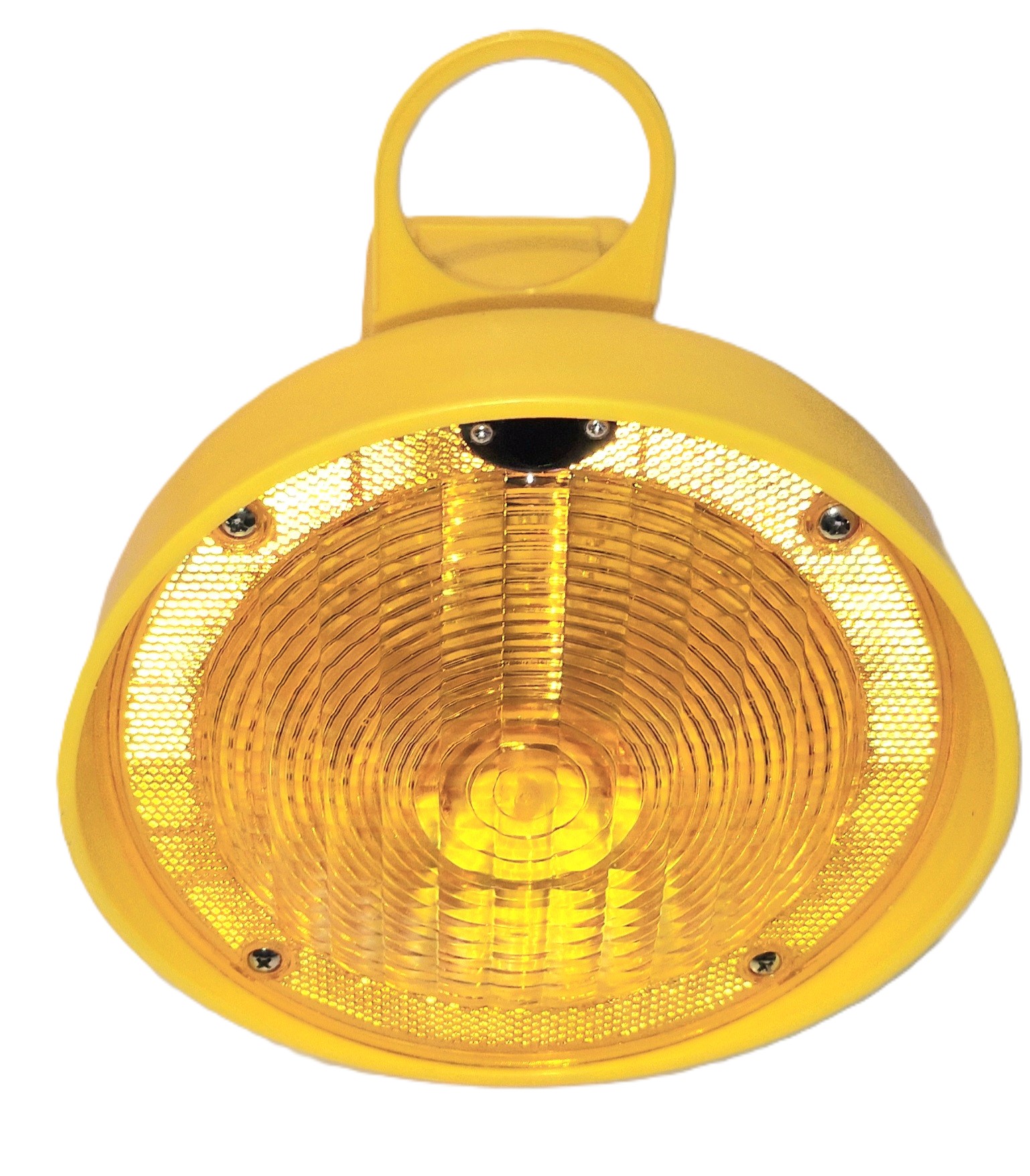
The lamp body is made from robust, easy‑to‑clean yellow polyethylene. The lens is high‑impact polycarbonate with a unidirectional design for maximum light output and includes a retro‑reflective ring compliant with DfT standards.
Features & Benefits
- Cost‑effective – better value than other market leaders
- Technically advanced IR synchronisation
- Fast deployment – push‑down power activation
- Retro‑reflective lens collar and omni‑directional lens
- Easy‑clean materials
- Highly efficient – optimised battery life
- Highly robust – tough materials and dirt‑resistant surfaces
- Replaceable parts – maintainable by operators, spares available
- Proven design – continual improvements over 5 years of UK deployment
Supply Options
Supplied in full cartons of 10 units, typically delivered within 2 working days by courier.
Pallet loads of 180 units are available with a typical lead time of 5 working days to UK addresses. Contact us for pallet delivery options.
Summary – Setup, Positioning & Performance
- Best visual effect at 2–5 metres spacing (maximum IR range approx. 15m)
- Orientate lamps in the same direction (±10 degrees)
- Push down on traffic cone to activate lever switch
- Constant high flash with background light 24/7
- Rear indicator light confirms signal reception from leading lamp
- Approx. 5 working days battery performance with 8000mAh battery
Yellow Flashing Cone Lamp
LED Traffic Cone Lamp
Cartons of 10 Sequential Yellow Road Cone Lamps can be purchased at discounted rates via this link.
Road Worker Safety
For motorway and highway operations, consider PPE such as the LED illuminated belt harness. With independently operated red LEDs on the rear and white LEDs on the front, workers are more visible to motorists and plant operators. Read more here.
Traffic Cone Lighting for Non‑Public Roads & Motorways
A 360‑degree lighting option for cones on private, commercial, or construction sites is available here. Green, red, yellow, and blue cone‑mounted LEDs are ideal for large‑scale events, parking control, and traffic marshalling.


