Description
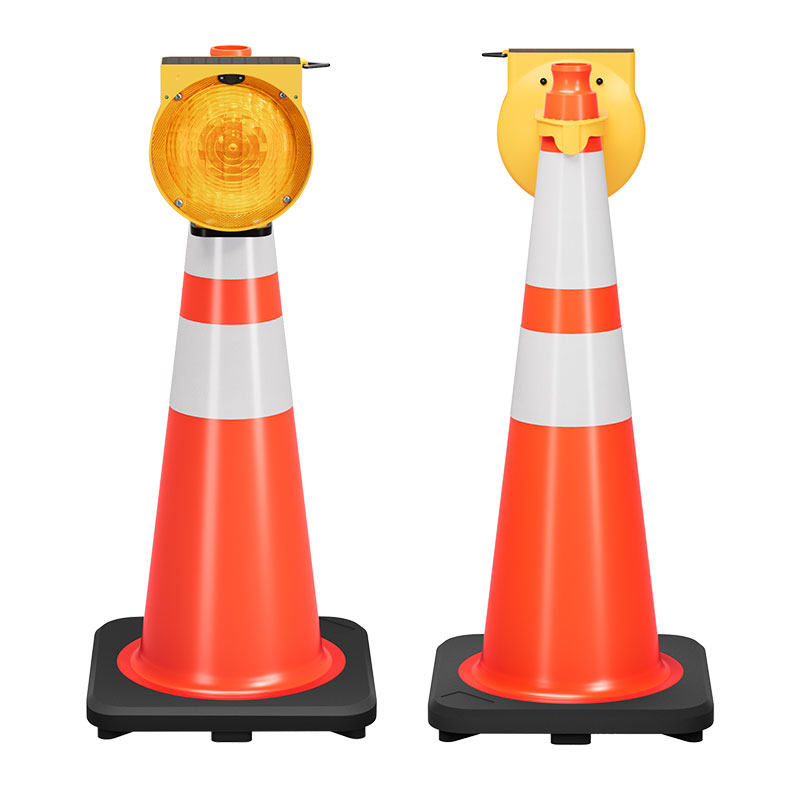
Sequential Solar Traffic Cone Lamp Carton of 10
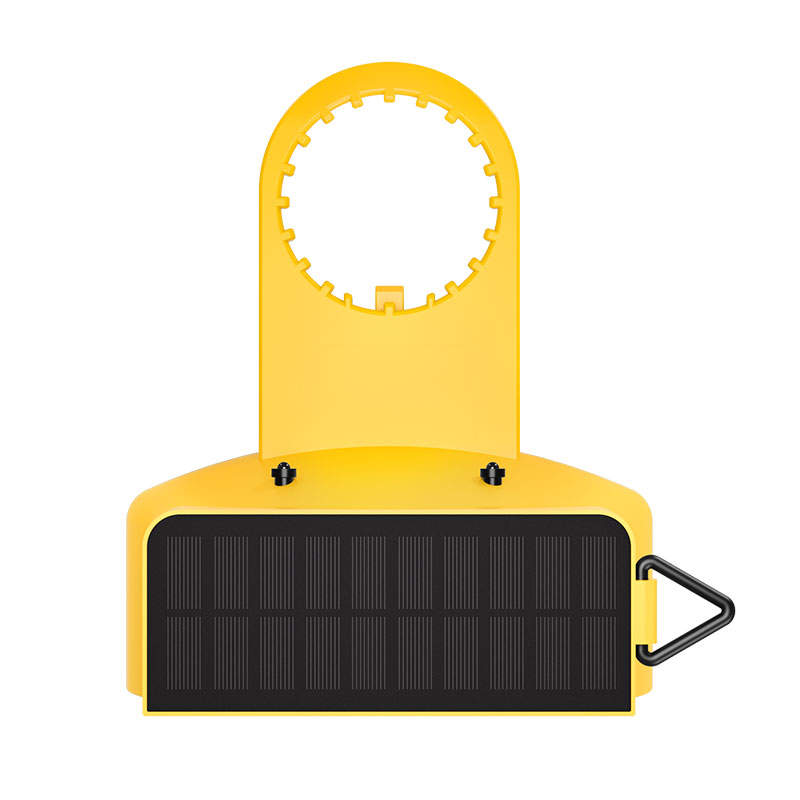
A green initiative, the Sequential Solar Traffic Cone Lamp is an exciting new development which couples our new synchronous cone lamp and its 8V 200mA solar panel with a rechargeable extended performance 6.41V 8000mA battery (purchased separately).
The innovative rechargeable battery replaces a traditional 4R25 style single use battery, the solar taper lamp with sequential feature supplements its power requirements with solar power weather conditions permitting , to provide extended endurance between battery changes.
Together they offer operators an opportunity to cut costs and recoup their investment in these new technologies in as little as 3 months with dramatic cost savings over a three year period which is a typical life expectancy for the rechargeable battery.
The power provided by the solar panel can extend battery duration by a massive 45-55% during the summer months, in our own field tests in November the solar augmented traffic lamp performed for an amazing 43% longer than a standard sync lamp running 24/7.
Field Testing
In our own comparative field tests conducted in the first week of November (which was very overcast) using identical fully charged batteries, our standard sequential cone lamp and the solar augmented sequential lamp were put on test at the same time.
The standard sync lamp ran for 108 hours before the battery depleted completely during the early hours, we did not observe it stopping so we rounded the hours back to when we knew it was last working which gave us that conversative 108 hours figure.
The solar sync lamp lasted over 2 working days longer, we observed it loosing power and judged it had become ineffective and concluded the test at 165 hours, that is an additional 57 working hours which is a massive 43% extended duration in autumn conditions.
Both lamp types use the same core componentry and operate with a constantly on, low background light with a 1 second bright flash sequential feature so apart from the solar panel it was a comparison of like for like lamps, same LED’s same IR components etc. NOTE the model of lamp in on continually once positioned on a traffic cone.
At the time of testing 28/10/25 to 4/11/25 we had mainly wet and very overcast weather, we were extremely excited at how effective the solar panel was at extending operational endurance knowing that it can only increase in the summer months.
We plan to conduct another field test in the middle of December for comparative purposes and to build up a case study and report back then.
How it Works
The Sequential Solar Traffic Lamp generates its own power during the day which puts charge back into the battery supplementing its power requirements and elongating the periods between battery changes. Noting that this version of sync lamp once positioned on a traffic cone and activated produces 24/7 light output with its low intensity backlight and 1 second bright light flash with sync taper functionality.
Intelligent circuitry directs power back into the battery via the battery connecting springs, the battery can be inserted any way into the lamp so operators do not have to orientate the batteries in any particular fashion (the charging polarity takes care of itself).
Operators benefit from an extended service interval between battery changes, longer in summer because of the additional light abundance which obviously reduces as we progress into winter.
Eventually the battery discharges with a decline in the brightness of the flash output indicating that the battery needs be exchanged or alternatively the lamp removed from the traffic cone to allow solar power recharging (how long this will take will be subject to prevailing weather conditions but typically 2 bright days of sunshine will fully re-charge the battery).
Rechargeable batteries are supplied in a case set of 8 units, each battery is connected to the case which then charges all units in situ. When fully charged the batteries can be hot swapped for discharged batteries, the recharge time cycle is 2-3 hours with LED indicators showing status of each battery.
Anti-theft & Anti Tamper Features
The cables connecting the batteries to the case charger are specifically designed, NO other cables other than factory supplied cables should be used as these will compromise and damage the battery, invalidating the manufacturers warranty.
This is an anti theft feature, we will not supply charging cables to operators who have not purchased directly from us to discourage inappropriate acquisition of lamps and batteries.
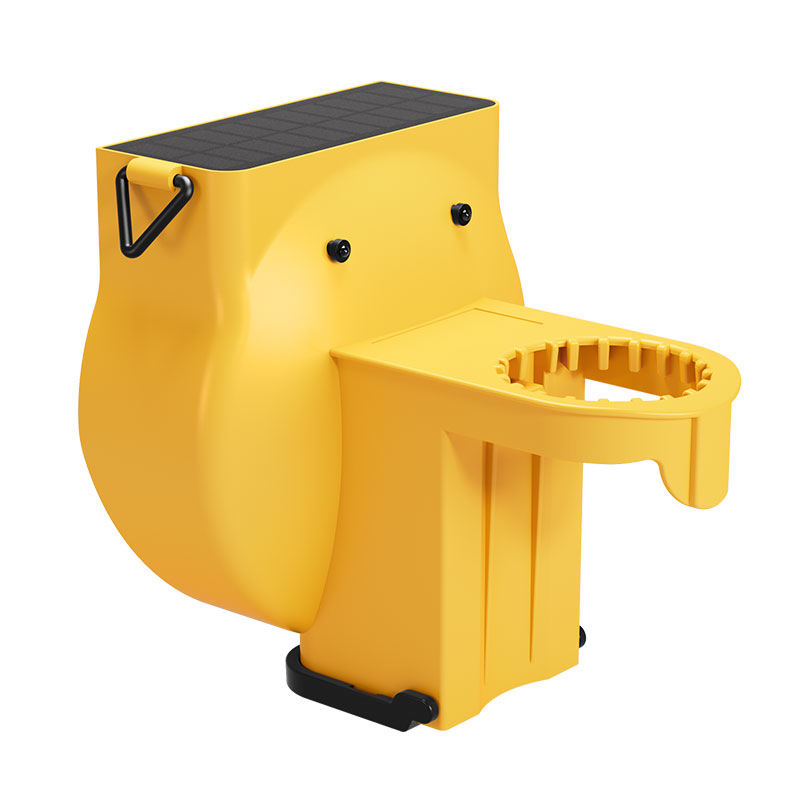
The solar sequential lamp has a different battery housing to our standard sync lamp, with the battery located to the front of a traffic cone (similar to Nissen style lamps). The battery cover requires a sturdy hand to release it, this helps locate the battery securely but is also an important anti-tamper feature, persons unfamiliar with the design of this closure will struggle to remove what is a valuable battery. This helps deter opportunist mischief on unattended products.
Do I still have to Change Batteries?
The UK with its variable seasons does not get enough sunlight to rely solely on solar power so the answer is yes but certainly not as frequently. Frequency will also be influenced by the road lamp specification as you can have photocell operation which only operate in low light and as a consequence have lower power requirements over a 24 hour period. If removed from traffic traffic cones and left in direct sunlight the lamps will recharge the battery but of course this will depend on ambient lighting conditions so the time frame can be variable.
The lamps are ideal for night time operators who deploy tapers only at night, if the lamps are left in sunlight when not deployed on traffic cones battery exchanges will be less frequent.
The powerful 200mA solar panel will always replenish some of the power used during operation, recharging the battery when conditions permit. However over an extended period of time the battery will discharge to the point that it needs replacement.
Using the latest materials the solar panel has been manufactured for challenging commercial environments and is certainly not of the type found powering your solar garden lights. The solar sequential lamp was designed with a brief to be able to withstand a 9 foot drop test onto concrete and performs similarly to its peers in terms of robustness.
Batteries have an LED power indicator that shows power levels when pressed and the lamp itself will indicate when the battery power is low by reducing the brightness of its primary 1 second flash whilst maintaining the low background LED light until the battery can no longer power the lamp.
This sensible design feature provides operators with a visual warning that battery levels are low without having to open the lamp and check the battery status.
Consider the Cost Benefits
Batteries still have to be exchange but not as frequently, the benefits of which include:-
- Reduced direct manpower costs
- Reduced indirect manpower costs – it’s not just the traffic management company that incur labour costs when maintenance occurs
- Reduced vehicle operating costs – less frequent changes, less vehicles on the road
- Reduced battery replacement cost (£1.60 for a basic battery getting changed 12 times a year £19.20)
- Reduced disruption to public – less frequent lane closures and speed restrictions
- Risk reduction – motorways and highways are hazardous environments, less maintenance equals a safer the work environment
- Less paperwork!
What is the Duration of a Solar Supplemented Battery?
There are many variables that come into effect here in terms of season, weather, lamp positioning, road contamination etc.
We are working with a national traffic management organisation to build up some Usage Cases and have conducted our own field tests in November with results that actually surpassed what we were anticipating from open source information and AI tools that provided us this source of information below.
Figures obtained from domestic solar power sources using AI tools state that in the UK, solar panels typically generate 65–75% of their annual electricity between April and September, and 25–35% between October and March.
That means:
Winter vs Summer Output Difference
- Winter output is roughly 60–70% lower than summer output.
- Put another way, a solar panel might produce 30–40% of its summer peak during the darkest winter months which we can estimate will be less in a highways based environment because of factors such as grime, shadows etc.
On the highways there’s increased road contamination during the winter months which will impact performance, this becomes part of a hygiene process similarly to periodic winter cleaning of traffic cones.
The solar panel is weather proofed and will tolerate a power wash, it uses the latest materials and design concepts so is not prone to condensation or water ingress as with earlier generation panels.
- Shorter daylight hours
- Lower sun angle
- Increased cloud cover
- Increased road contamination
Despite the reduced output, solar panels still work in winter — especially on cold, clear days when they can be surprisingly efficient.
Statistics used in the domestic household solar power sector provide us with interesting figures, and using those as a basis conservatively we estimate an average 50% increase in the service intervals between battery changes having already achieved a 43% increase in duration in our November field trials.
In ideal conditions in high summer enough solar power is likely to be generated to completely top up the battery whereas in winter, less solar generated power means the batteries will need more frequent battery changes.
What is for sure is that costs over the course of a year will be significantly reduced even after the higher initial cost outlays are taken into consideration.
The rechargeable battery has a performance profile similar to a quality non-rechargeable battery @150hrs, add in the boost of daily free solar power and you extended the service interval by up to 50%
Factor in the ability to recharge batteries up to 500 times removing the need to replace standard batteries at £2.00 per time and the cost savings start to add up exponentially.
Specification
A Sequential Traffic Cone Lamp that benefits from a large solar power panel that during daylight hours replenishes some of the charge in a rechargeable battery
Sequential road tapers cone lamps use infrared technology to signal the next lamp in sequence to create a cascade light effect as required on road tapers and lane merges.
The leading lamp will establish itself as the master and signal the next in line to flash, this continues down the line creating the desired sequential chase flashing pattern.
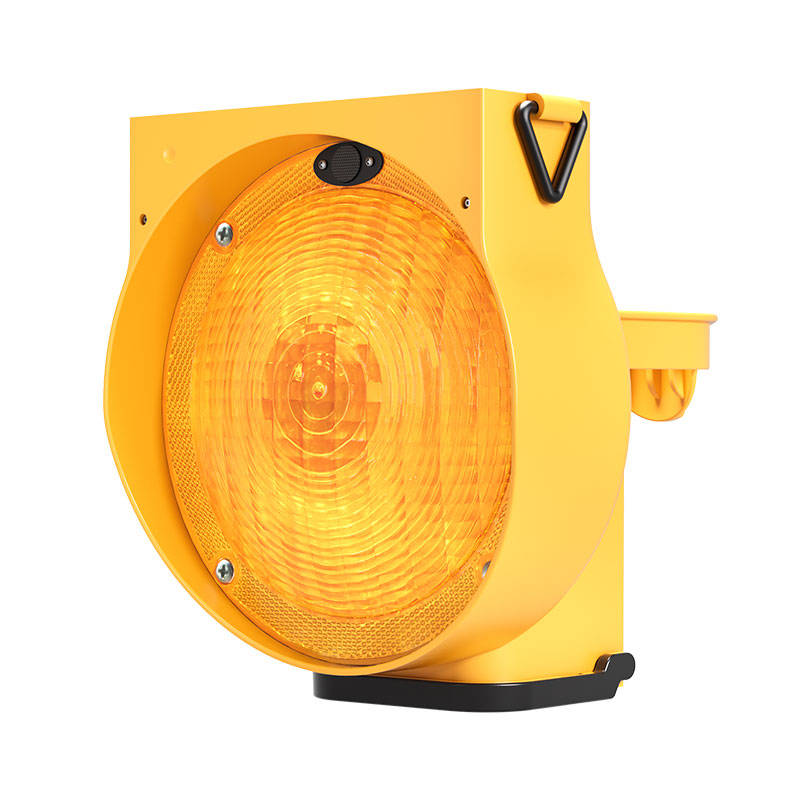
A single 1W LED provides illumination, with a flash rate of 60 per minute at 65CD Brightness (L7Class) and a steady on mode between flashes of 2CD (L3 Class)
The lamp uses a single rechargeable 6.41V 8000mAH lithium battery (similar in appearance to a 4R25 battery) which is purchased separately which would without solar power input typically provides 1000 hours of operational running time
Certified to EN12352:2006+AC2009 standard.
Positioning & Powering On
Typically deployed in strings of 17 lamps by traffic management operators (more if required) they can be positioned from between 2 to 15 metres apart, in any order as there is no master or slave lamp, with an offset of +-10 degrees. The angle enables the IR sensors to establish which lamp is first in sequence, signalling the next in line until the synchronised cascade effect is fully achieved.
Pushing the road lamps down onto the traffic cone will automatically power them when they will immediately begin to identify other lamps and establish their flashing sequence.
Within 15-20 seconds of deployment each lamp will have established connections with their nearest counterpart and a sequential light pattern will commence from front to back in a chase pattern,
Each lamp has an indicator light on the rear of the casing that flashes when a signal is being received from the unit in front, this visual indicator helps quickly identify lamps that are wrongly positioned, obstructed or have become inoperable due to damage.
Practical Design
Features & Benefits
- V6 200mAh Solar Panel
- Cost Effective – Better value than other market leaders
- Technically advanced – Solar power switching, IR synchronisation
- Smart Design – Fast deployment push down power activation
- Highly efficient – supplements battery power with free solar power, optimises battery duration
- Highly robust – tough materials, dirt resistant easy clean surfaces
- Replaceable parts – Maintainable by operators, spare parts available
- History of development – Continual improvements to proven design.
Supplied in Full Cartons Only of 10 units per carton, delivery made by courier typically within 2 working days.
Pallet loads of 250 units are available typically with a lead time of 5 working days to a UK delivery address, call for pallet delivery options.
Cone Lamps
Sync Cone Lamp
Standard Cone Lamps can be seen if you click on this link
Road Worker Safety
If you operatives are working on the motorways and highways consider PPE such as the LED illuminated belt harness, with independently operated Red LEDs on the rear and White LED’s to the front motorists and plant drivers can see which way your workers are facing read more here


