


Description
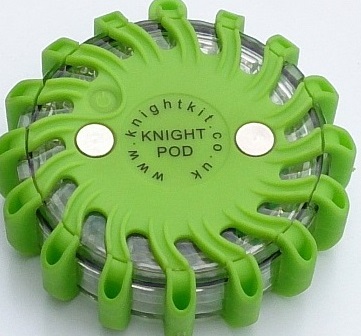
Green Aviation Warning Lights – Case Set of 6 Units
Rechargeable Green LED Hazard Lights for Aviation
This case set of six rechargeable green aviation warning lights is designed for helicopter landing zones, helipads, air ambulance operations, and private charter landing sites. Each unit is robust, waterproof, and engineered for demanding aviation environments.
A demonstration video is available here: Green Aviation Warning Lights Video.
Rapid Deployment with Multiple Mounting Options
Each light features a strong integrated magnet, allowing rapid attachment to metallic surfaces. Optional traffic cone adapters enable elevated off‑ground mounting, ideal for landing zones requiring increased visibility.
Hoops around the diameter of each Knight Pod allow secure fixing using zip ties, soft‑ground pins (tent pegs), or other anchoring methods to resist rotor downwash.
Rechargeable Case System
The set includes both in‑vehicle and UK mains chargers. All six Pods charge simultaneously inside the supplied case using a single cable connection.
Recharge time is typically 2–3 hours, making the system highly economical compared to traditional battery‑powered beacons that require frequent battery replacement.
Highly Robust Construction
Each Knight Pod contains 16 LEDs and offers nine selectable flash patterns. The units are extremely durable — they can withstand the weight of a family saloon car driving over them without damage.
Fully waterproof, the Pods naturally land flat when dropped, ensuring continuous visibility without the risk of tipping over.
Flash Modes & Endurance
| GREEN ROTATING LEDS | 7 HOURS |
| GREEN QUAD-FLASH | 7 HOURS |
| SINGLE-BLINK GREEN LEDS | 40 HOURS |
| ALTERNATE GREEN LEDS | 7 HOURS |
| SOS (MORSE CODE) RESCUE | 12 HOURS |
| SOLID-ON HIGH GREEN WARNING LIGHT | 3 HOURS |
| SOLID-ON LOW GREEN WARNING LIGHT | 30 HOURS |
| 2 GREEN LED FLASHLIGHT | 7 HOURS |
| 4 GREEN LED ILLUMINATE | 5 HOURS |
Dimensions
Knight Pod (each): 10.5cm diameter, 3.5cm height, 180g
Knight Pod Case (set of 6): 45cm × 38cm × 6cm, 3.2kg
Available Colours
Knight Pods are also available in:
Replacement single units:
Summary: Green Aviation Warning Lights – Case Set of 6 Units
Rechargeable Green LED Beacon
Helicopter Landing Lights – Read more…
Recharging Best Practice
To ensure safe and reliable operation of rechargeable aviation warning lights:
- Remove units from service if impacted or showing signs of damage
- Only use factory‑supplied charging accessories
- Do not exceed the recommended 3‑hour charging duration
- Use timed switches for added charging safety
- Do not recharge units showing signs of overheating (discolouration, heat, smoke, fumes)
- Charge only in attended areas
- Charge on a hard, non‑combustible surface


